Michael Talbot and Existence

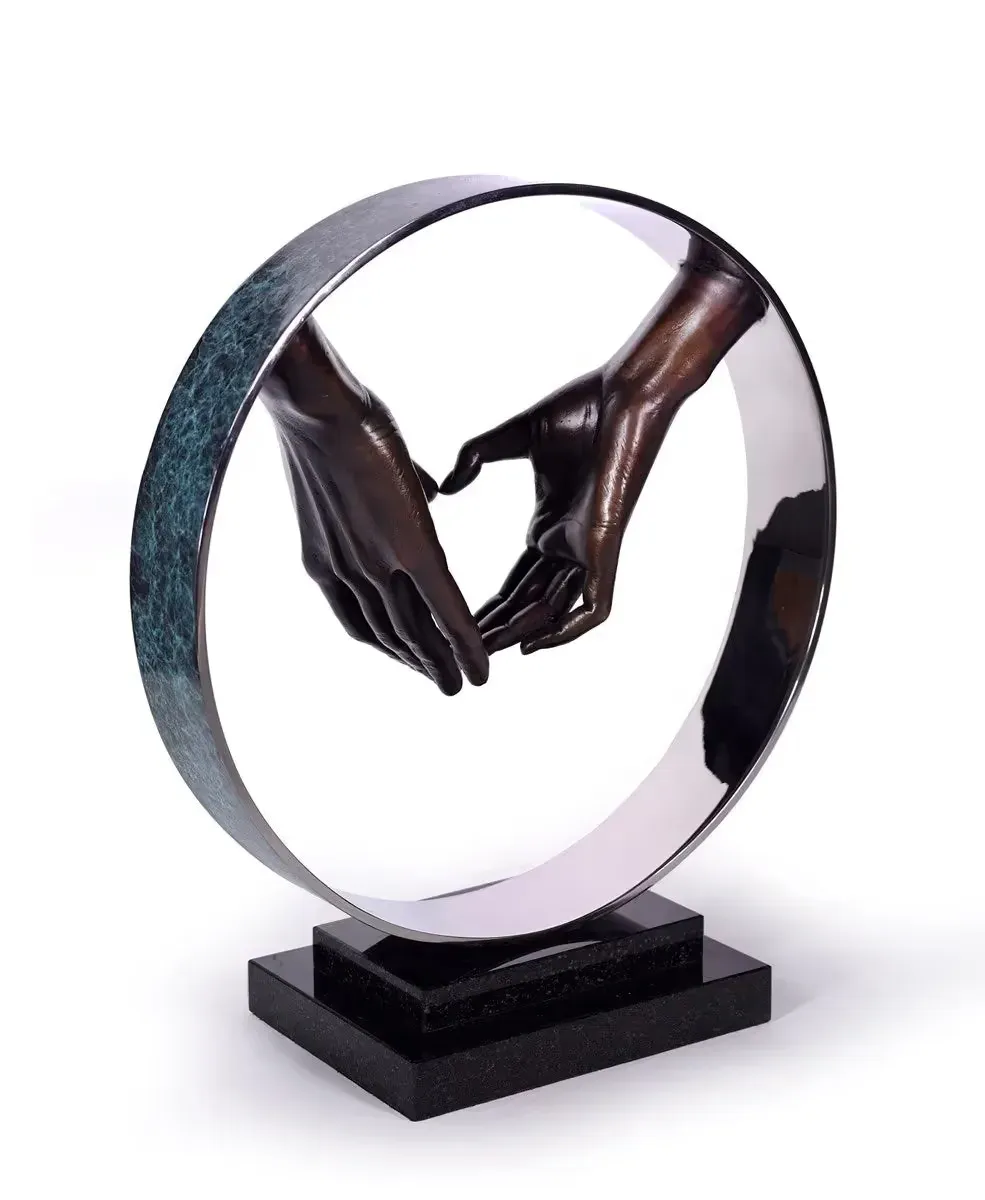
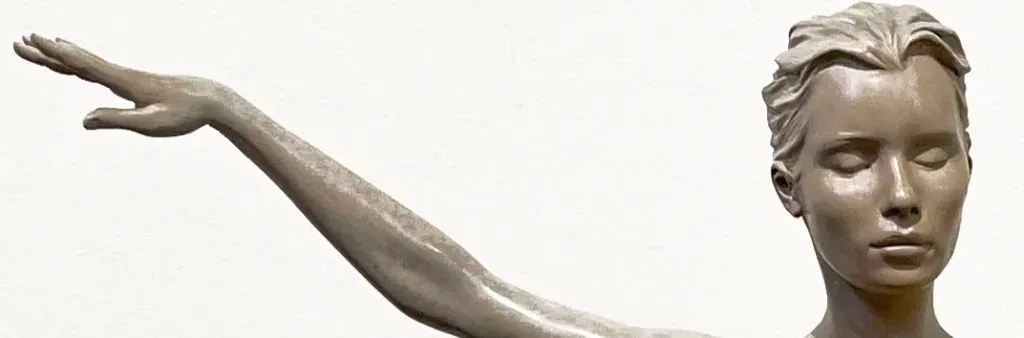 Michael Talbot is a contemporary British sculptor whose works seem infused with deep reflection on existence and the passage of time. Through his sculptures, often female figures in elegant and delicate poses, Talbot manages to convey a subtle anxiety, an almost imperceptible tension that runs through the bodies he models. This anxiety is not expressed in dramatic gestures or exaggerated poses, but can be felt in the way his figures seem suspended between eternity and the ephemeral, between dream and reality.
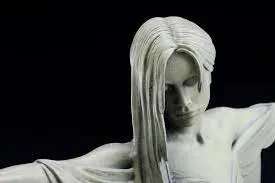 One of the most fascinating aspects of his works is the contrast between the apparent lightness of the figures and the heavy material of the bronze he uses. His sculptures seem to defy gravity: bodies stretching upwards, reaching out as if in eternal motion, yet at the same time firmly grounded. This tension between the desire to rise and the awareness of the heaviness of human existence is one of the most distinctive elements of Talbot’s work.
The anxiety in his works emerges precisely from this duality. The figures, although perfectly harmonious and serene on the surface, conceal a sense of dissatisfaction, a constant search for something unattainable. It’s as if Talbot’s sculptures tell a story of aspiration and failure, of dreams that can only be partially realized. There’s a delicacy in his bodies, but also a fragility that seems ready to break at any moment.
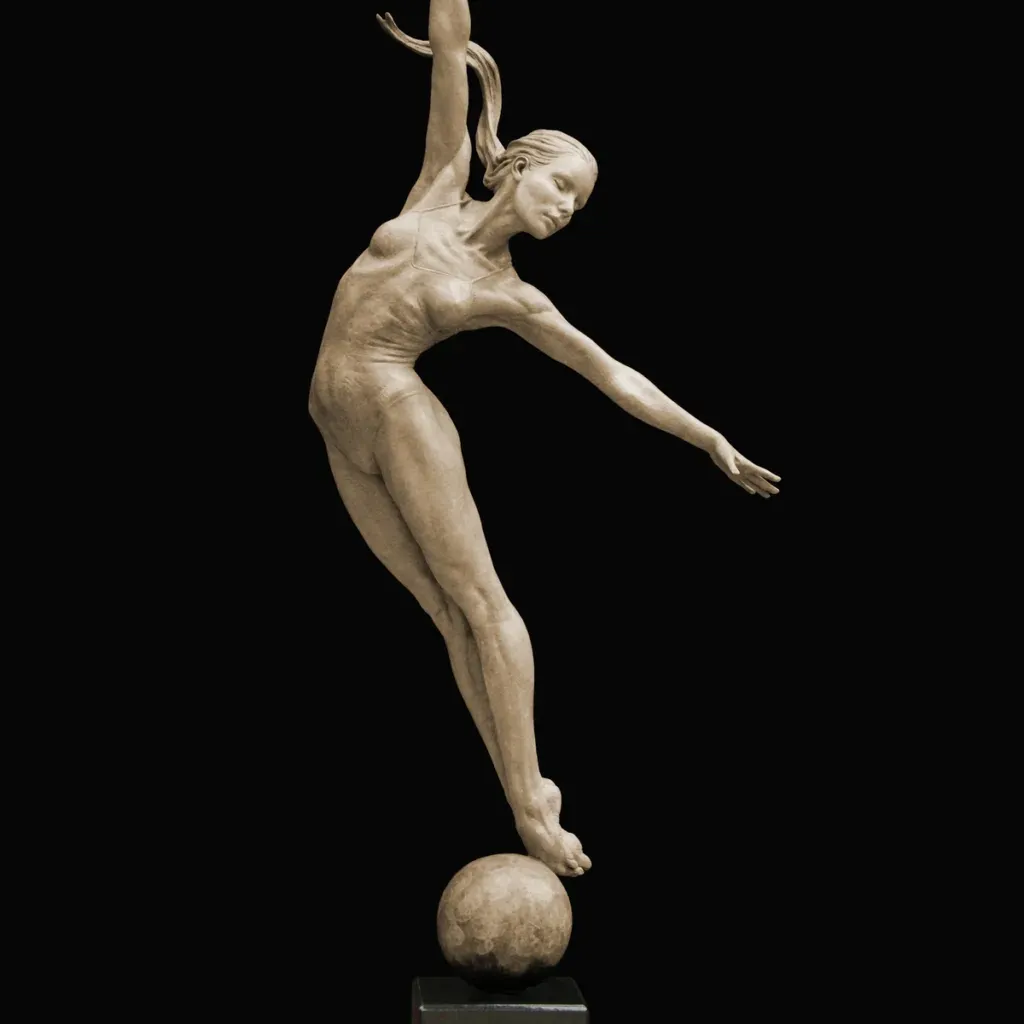 In this sense, Talbot’s works can be seen as a symbolic representation of human existence. The way the bodies bend, stretch, and try to touch the unknown suggests a constant inner struggle: that of wanting to escape the limits of the human condition, to go beyond, but without ever fully succeeding. Talbot reminds us, through his still yet dynamic figures, that the human desire for transcendence is accompanied by an inescapable awareness of our own mortality.
The anxiety of these figures is also evident in the details: hands stretched upwards as if in prayer, faces that never directly look at the viewer but are lost in an undefined space beyond our field of vision. These elements give Talbot’s works an aura of mystery, a melancholy that emerges from every fold of the sculpted body.
 In conclusion, Michael Talbot’s sculptures are not simply beautiful or elegant, but they hide a subtle veil of unease. Their beauty is imbued with an existential tension that speaks to the heart of the viewer, raising profound questions about the meaning of existence, the search for significance, and the struggle against the limits of human nature. His figures, though seemingly serene, are trapped in a state of perpetual search, powerfully representing the anguish of the human condition.
 Subscribe to our channel YouTube