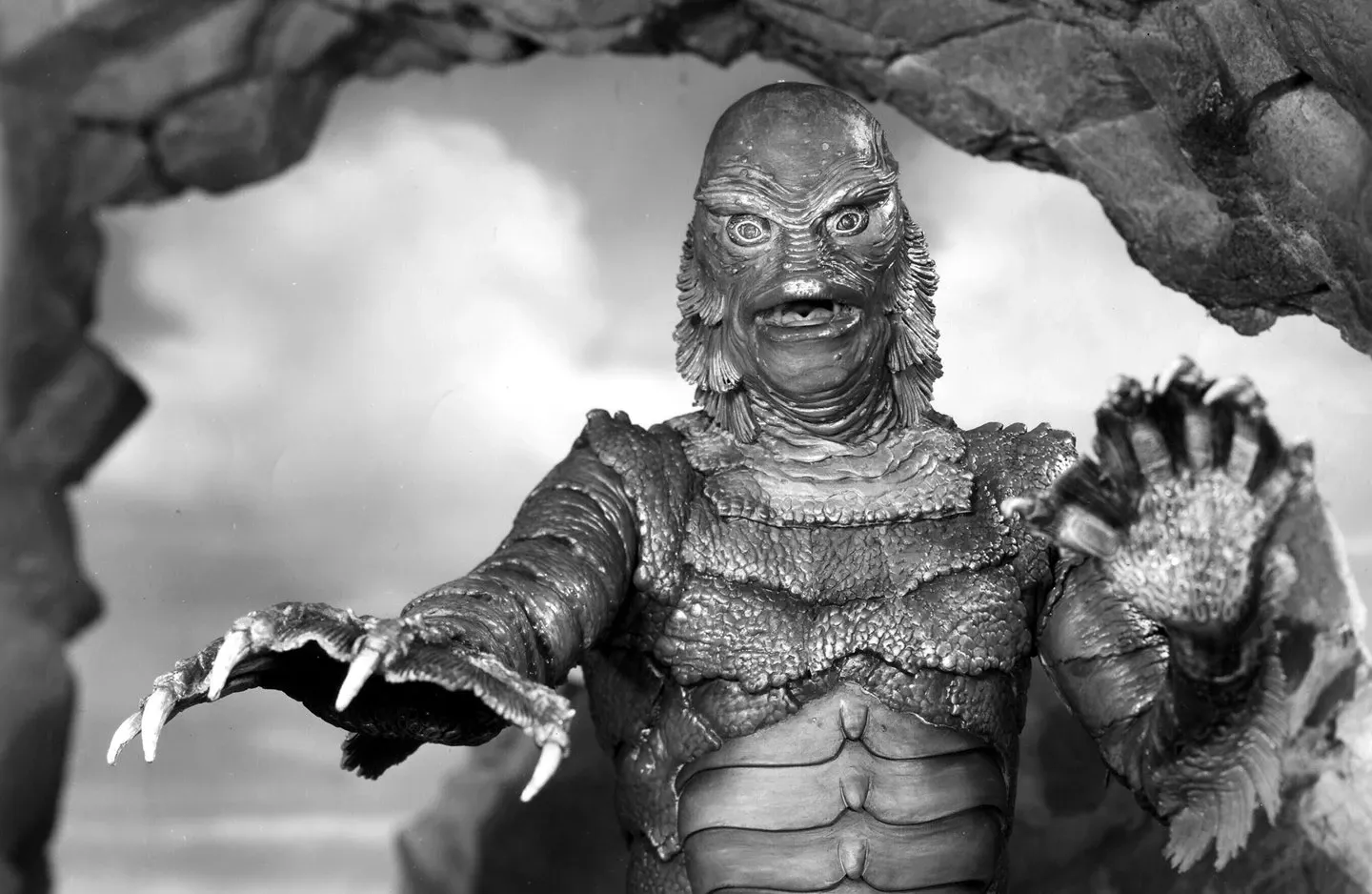
Creature from the Black Lagoon

Creature from the Black Lagoon (1954 – directed by Jack Arnold)
A Horror Classic That Defined an Era”
In the vast landscape of cinematic horror, few films have captured the imagination and excitement of audiences like “Creature from the Black Lagoon” from 1954, directed by Jack Arnold. This genre classic represents a turning point in cinema history, introducing audiences to an iconic monstrous creature and skillfully blending suspense, adventure, and romance.
The film’s plot revolves around a group of scientists embarking on an expedition to the remote Black Lagoon in the Amazon, in search of fossils and archaeological artifacts. However, their journey takes an unexpected turn when they encounter a prehistoric creature resembling a man-amphibian, known as the “Creature from the Black Lagoon.” What follows is a struggle for survival as the men seek to capture the creature for study, while the monster begins to show a growing interest in one of the female crew members.
One of the most distinctive features of the film is its masterful use of suspense and atmosphere. Jack Arnold creates a palpable sense of tension, keeping audiences on the edge of their seats as the Creature from the Black Lagoon lurks in the dark, dense waters of the Amazon jungle. The skillful use of underwater shots adds further allure and intensity to the film, offering a unique perspective on the encounters between humans and the creature.
Moreover, the film stands out for its approach to characterisation and storytelling. Despite the technical limitations of the time, the film manages to create three-dimensional and complex characters, each with their own motivations and fears. The ambiguous relationship between the monster and the female lead adds an element of romance and pathos to the story, turning the film into more than just a monstrous spectacle.
Beyond its intrinsic horror elements, the film also offers reflection on broader themes such as human nature, scientific discovery, and the conflict between man and nature. These elements give the film a depth and relevance that make it still worthy of study and discussion today.
In conclusion, “The Creature from the Black Lagoon” from 1954 remains a timeless classic that has left an indelible mark on the landscape of cinematic horror. With its combination of gripping suspense, evocative atmosphere, and engaging storytelling, the film continues to enchant and frighten audiences of all ages, demonstrating its status as a masterpiece of the genre.