The Man Who Laughs

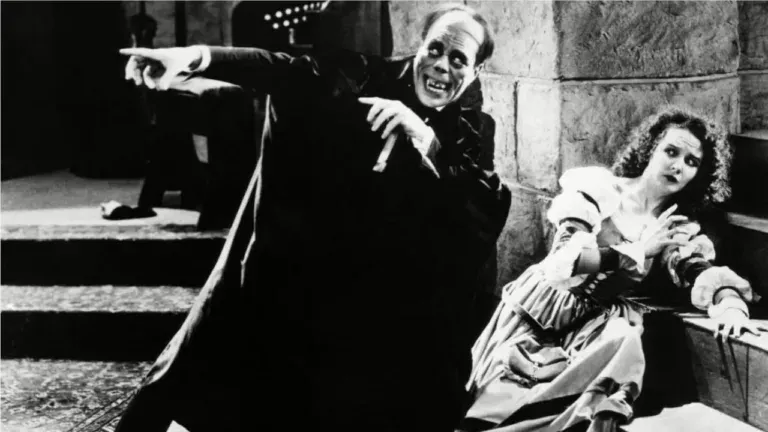
The Man Who Laughs is a 1928 silent film directed by Paul Leni and based on a novel by Victor Hugo.
In 1690, Lord Clancharlie returns to England after exile but is accused of treason and captured by James II of England.
Before dying, unfortunately, he learns that his son, Gwinplaine, has been sold to the “comprachicos”, a ruthless gang of criminals from various nations who disfigured the boy by cutting his lips so they appear locked in an eternal smile.
During an especially harsh winter, he is taken in by Ursus, along with Dea, a blind girl…
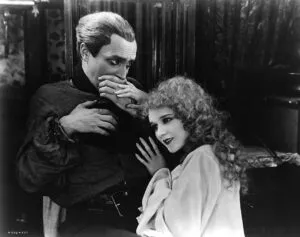
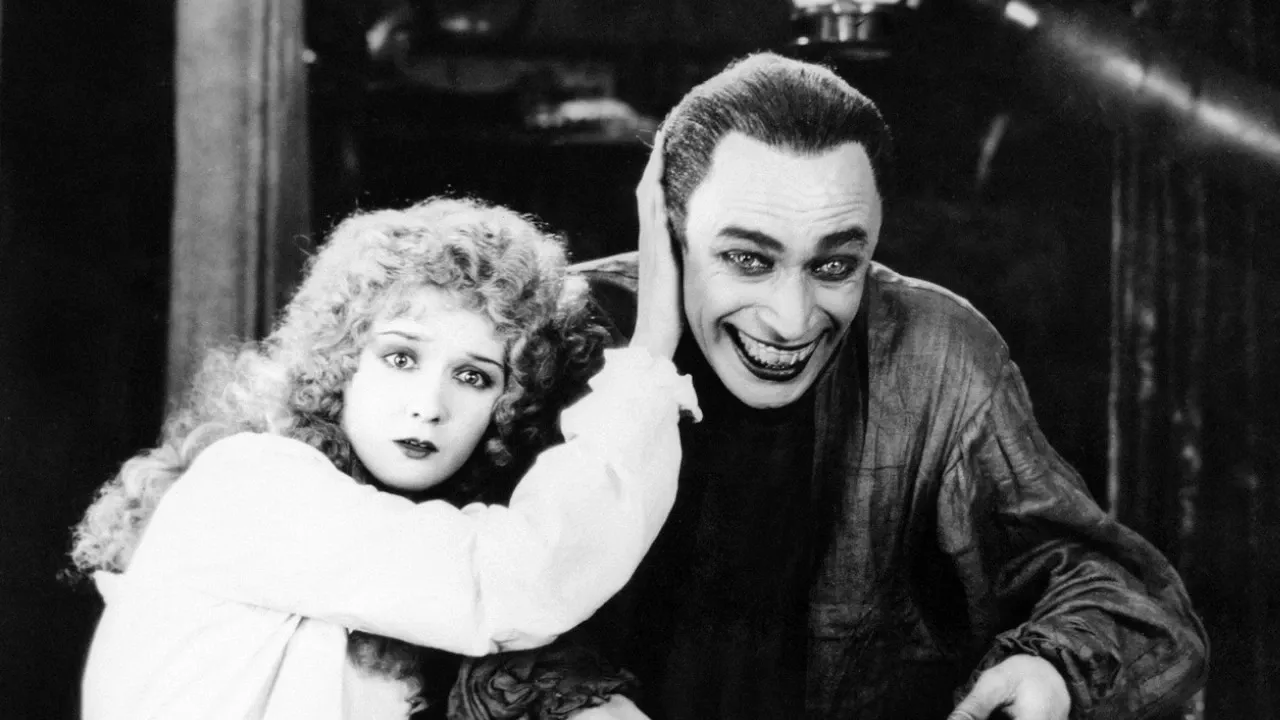
Thanks to his artificial grin, he becomes a famous clown who attracts masses of people and falls in love with Dea, who reciprocates.
The jester Barkilphedro discovers that Gwinplaine is of noble origins and plans to use him to curry favor with Queen Anne, who succeeded her father.
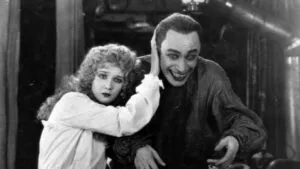
He weaves a web of secrets and scandals that first lead Duchess Josiane, the Queen’s sister, to fall in love with Gwinplaine, and ultimately sees him restored to the English aristocracy, even hailed as a “Peer of England.”
However, the new life as a noble deeply frustrates Gwinplaine, as he is still marginalized and viewed by the aristocrats as nothing more than a freakish clown…
He longs for his life with Dea and Ursus.
After a disastrous speech at the “House of Lords”, the Man Who Laughs decides to escape and return to his old life.
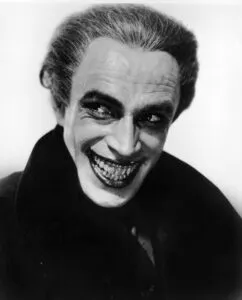
Most likely, this is Conrad Veidt’s ultimate acting performance, as well as the unofficial birth of the Joker, both in his mad and melancholic traits.
Remind you of someone?
Especially in its latest version, the similarities are striking, particularly the connection between Veidt’s smile and the Joker’s laughter — a source of mockery, embarrassment, discomfort, and deep sadness, leading to an explosive outburst of rage.
A vintage gem that should not be missing from the collections of the best cinephiles, or anyone curious about the theme.
 Subscribe to our YouTube channel