Troy Brooks: Gothic Portraits as Photographs

Troy Brooks: Gothic Portraits as Photographs
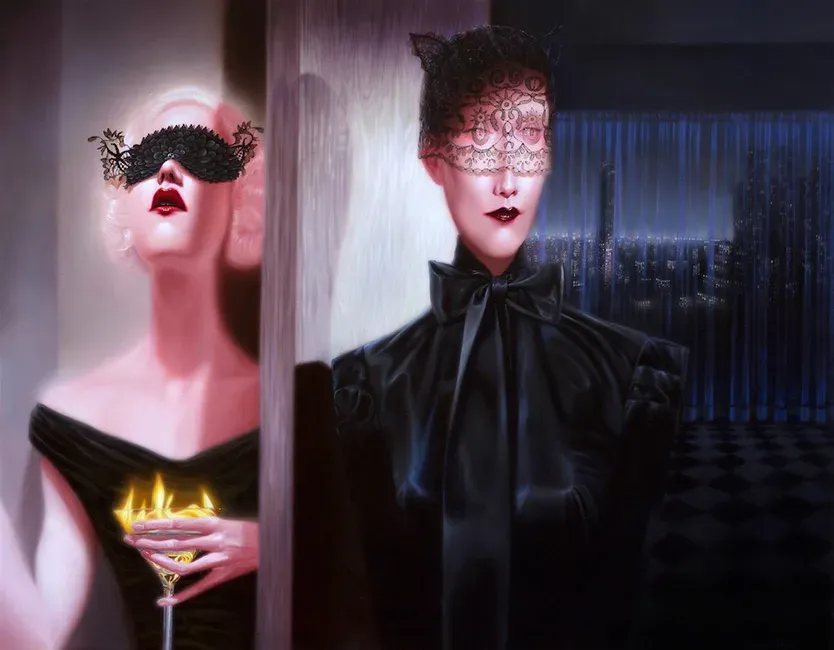
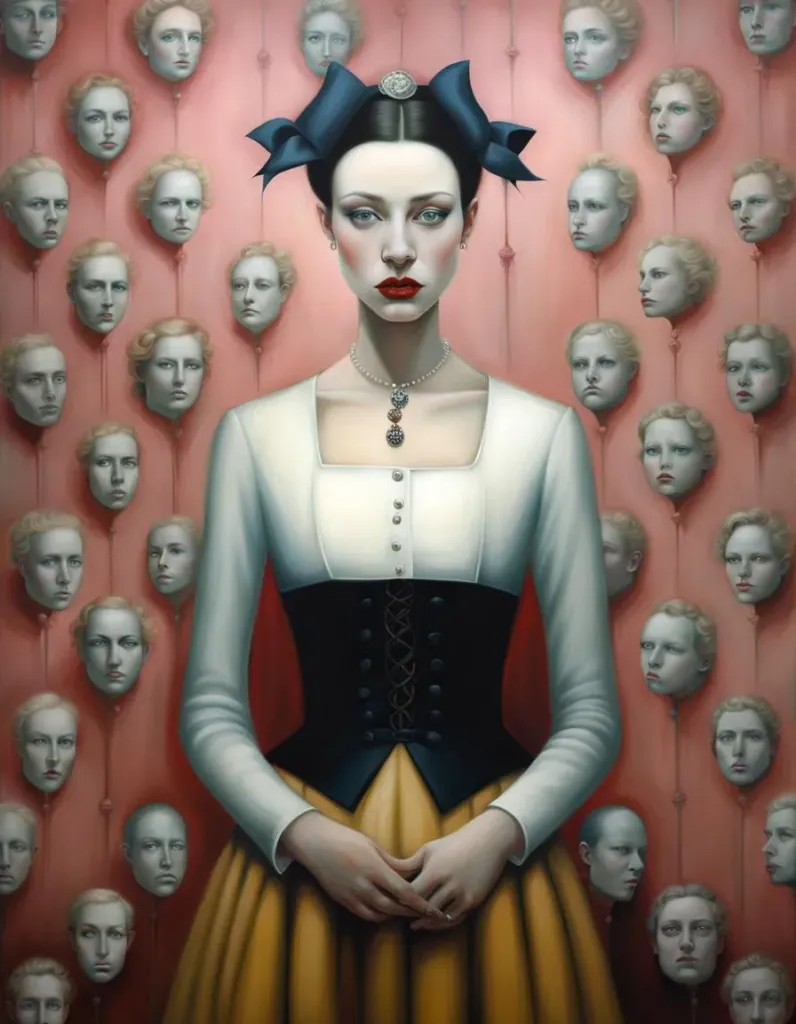
Troy Brooks is a Canadian visual artist who has established himself as one of the most distinctive and captivating portraitists in the contemporary scene. Although his work is primarily painted, his pieces possess an extraordinary photographic quality that, combined with the aesthetics of gothic horror, creates a powerful visual impact. His portraits, depicting elegant and unsettling female figures, are an exploration of power, identity, and duality, immersing the viewer in a world suspended between beauty and terror.
 The Photographic Quality in Troy Brooks’ Works
One of the most surprising features of Troy Brooks’ work is the extremely high level of realism and precision in the details, which gives his paintings a remarkable photographic quality. His works are created with an extraordinarily refined technique that allows him to create smooth and shiny surfaces, similar to those of photography. This heightened realism is one of the elements that makes his female figures so enigmatic and hypnotic.
The figures painted by Brooks are often illuminated by soft, diffused light, contributing to a dreamlike and surreal atmosphere. This use of light, akin to what one might find in a carefully composed photographic portrait, highlights the shapes and expressions of his subjects, adding an additional level of drama and tension. The photographic quality of his works is not limited to painting technique but also extends to composition and color use, reminiscent of high fashion photography and cinema.
His works often feature subjects in static poses, with penetrating and inscrutable gazes, seemingly challenging the viewer to seek a deeper meaning. This effect, along with the hyperrealistic quality of the details—such as skin texture, reflections in the eyes, and perfectly styled hair—renders his figures almost tangible, as if they could come to life at any moment.
Gothic Horror: Beauty and Terror
Troy Brooks is known for his gothic and surreal aesthetic, which blends elements of classical beauty with a haunting and often disturbing subtext. His ethereal and almost otherworldly female figures embody a cold and distant beauty, leading to a form of sophisticated and subtle horror. There is a sense of duality in his works: the perfect harmony of lines and the grace of his figures contrast with an underlying unease that emerges from their enigmatic expressions and suspended settings.
Gothic themes are central to Brooks’ work. His subjects are often depicted in environments evoking decay and darkness, such as crumbling palaces, abandoned rooms, or surreal landscapes that seem to have sprung from a dream or nightmare. These environmental elements, combined with his subjects, create a palpable tension between the visible world and the invisible, between the real and the supernatural.
His works also explore themes such as metamorphosis and decay, typical elements of gothic aesthetics. Brooks’ figures, while immaculate and almost divine, seem to carry with them a sense of impending ruin, as if they are on the brink of transforming into something completely different and unknown. This sense of transformation and mystery is what lends his works an atmosphere of subtle horror that both fascinates and disturbs.
 The Representation of Femininity: Strength and Vulnerability
The protagonists of Troy Brooks’ portraits are almost exclusively women, portrayed in a way that expresses both strength and vulnerability. His female figures are often depicted in attitudes of power and control, yet this power is often complicated by a sense of isolation or detachment. They are enigmatic creatures, seeming to dominate their environment while simultaneously being trapped within it.
This dual aspect of femininity—its ability to be both dominant and vulnerable—is a recurring theme in Brooks’ works. His women are simultaneously goddesses and victims, embodying the seductive and destructive power of beauty but also its intrinsic fragility. This dualism is exemplified in their penetrating gazes, which seem to suggest a secret knowledge or hidden pain.
Brooks uses femininity as a means to explore broader themes related to identity and psyche. His figures are often described as personifications of emotions or states of mind rather than real individuals. This approach allows Brooks to create portraits that are not simply representations of beauty but complex reflections on the nature of identity and human experience.
The Suspended Narrative: An Untold Story
Another fundamental aspect of Troy Brooks’ work is his ability to create suspended narratives. Each of his works seems to tell a story, but this story is largely left to the viewer’s imagination. His figures appear to be caught in a crucial moment, just before a significant event, yet what this event might be remains a mystery.
This narrative approach is highly effective in engaging the viewer, who is invited to create their own interpretation of the scene. Brooks’ works are therefore not only visually powerful but also intellectually stimulating, as they challenge the observer to seek a deeper meaning and confront their own perceptions and prejudices.
 Cultural Impact and Critical Reception
Troy Brooks’ works have made a significant impact both in the contemporary art world and in popular culture. His ability to blend realism, surrealism, and gothic elements has made him a prominent figure in the international art scene, attracting the attention of collectors, critics, and art enthusiasts.
The critical reception of his work has been extremely positive, with many praising his ability to create images that are both beautiful and unsettling, powerful and subtle. Brooks has been described as a master of visual narrative, capable of evoking complex and contrasting emotions through his art.
His work has been exhibited in numerous galleries and museums, and his pieces have been published in various art magazines and catalogs. Moreover, his unique style and use of symbolism have influenced other visual artists, contributing to the redefinition of the boundaries between traditional figurative painting and contemporary art.
Conclusion: An Artist Between Photography and Painting, Beauty and Terror
Troy Brooks is an artist who has created a visual universe where beauty merges with terror, and painting approaches photography in precision and realism. His works, laden with symbolism and narrative tension, are a profound exploration of the human psyche and its mysteries. With his unmistakable style and ability to evoke intense emotions, Brooks has established himself as one of the most innovative and influential portraitists of his generation.
His enigmatic and powerful female figures continue to enchant and disturb the viewer, inviting them to explore the darkest corners of their own minds. In a world where art increasingly leans towards the conceptual and the abstract, Troy Brooks reminds us of the strength and relevance of figurative portraiture, transforming it into a mirror in which we can see our dreams, fears, and deepest aspirations reflected.
Don’t forget to read the articles on the other Horror Photographers in our Top 10… they have explored the depths of human anguish and terror, capturing images that challenge and fascinate observers. Their ability to evoke intense emotions through photography has made them key figures in the global artistic landscape.
 Subscribe to our YouTube channel