Hieronymus Bosch: The Master of Apocalypse and Medieval Surrealism

Introduction
Hieronymus Bosch: The Master of Apocalypse and Medieval Surrealism (1450-1516) is one of the most enigmatic and visionary painters in the history of Western art. Known for his detailed and surreal depictions of biblical, allegorical, and fantastical scenes, Bosch created a body of work that continues to puzzle and fascinate scholars, critics, and art enthusiasts. His unique style and complex compositions make him a precursor of surrealism and fantastic art, while his themes of sin, redemption, and apocalypse resonate deeply in horror culture.
The Life of Hieronymus Bosch
Born as Jheronimus van Aken around 1450 in ‘s-Hertogenbosch, a city in modern-day Netherlands, Bosch came from an artistic family. Little is known about his personal life, but his paintings provide abundant evidence of his vivid imagination and technical skill. He spent much of his life in his hometown, where he died in 1516.
Bosch was a member of the Brotherhood of Our Lady, a religious confraternity that may have influenced his worldview and the themes of his work. His art reflects a deep concern with moral and religious issues typical of the late Middle Ages, and an obsession with depicting sin and redemption.
 Themes and Style
 Themes and Style
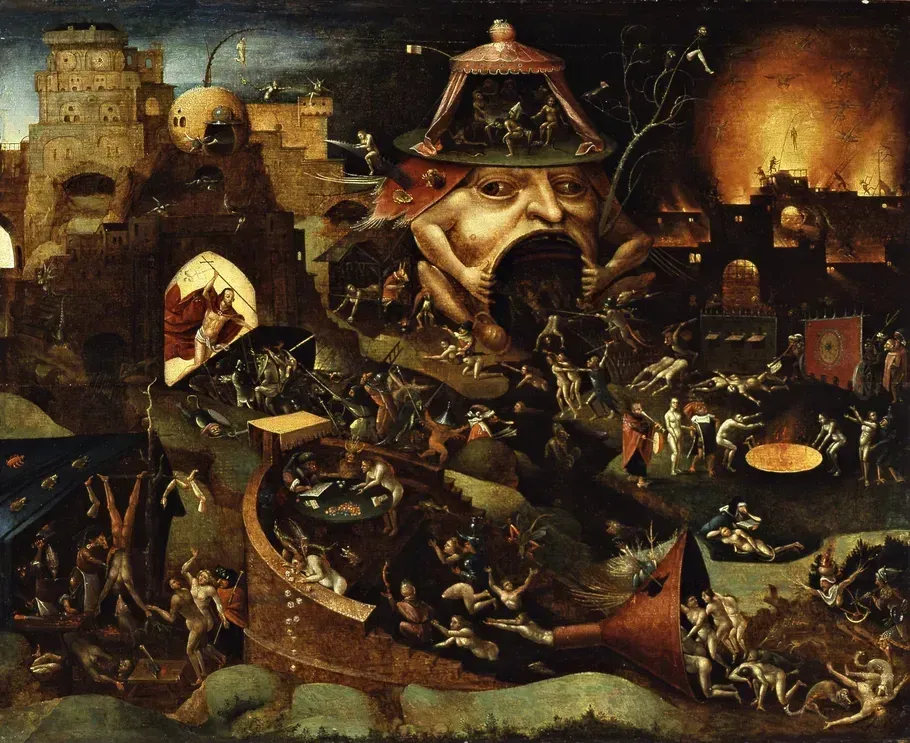
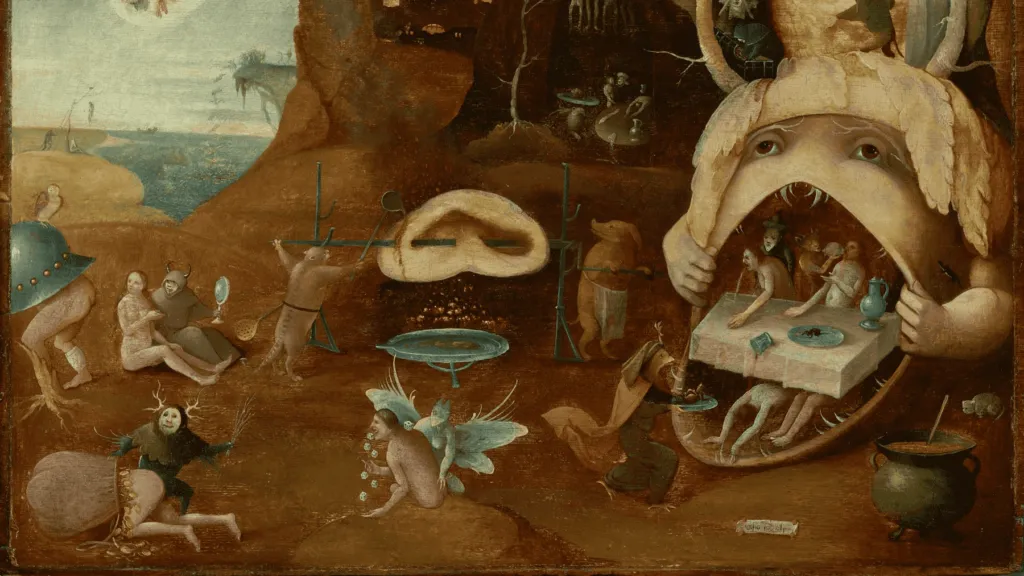
Bosch’s works are famous for their visual complexity and intricate iconography. His paintings are often populated by monstrous creatures, scenes of torture, and surreal landscapes that seem to have come straight from a nightmare. Major themes include sin, the fall of man, Hell, and redemption, all treated with a mix of grotesque humor and deep seriousness.
One of his most well-known masterpieces, “The Garden of Earthly Delights” (circa 1490-1510), is a triptych depicting, from left to right, the Garden of Eden, a lush and corrupt world, and the torments of Hell. Each panel is rich with detail and fantastic figures that require careful and reflective observation. Bosch uses a wide range of symbols to express complex concepts, making each painting a sort of enigmatic moral narrative.
Tecnica e Influenze
Bosch was a master of the oil-on-wood technique, allowing him to create incredibly fine details and vivid colors. His skill in painting textures, lights, and shadows gives his works an almost three-dimensional quality. He used delicate brushstrokes and dense composition, filling every available space with minute details and complex figures.
Bosch’s influences are numerous and include medieval art, miniatures, and the works of contemporary artists like Jan van Eyck. However, his work is notably original and distinctive, characterized by a boundless imagination that anticipates later artistic movements such as surrealism. Artists like Salvador Dalí and Max Ernst have cited Bosch as an inspiration, recognizing his pioneering role in the field of fantastic art.
 Legacy and Influence
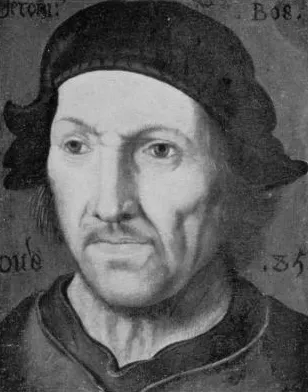 Legacy and Influence
The work of Hieronymus Bosch has left an indelible mark on the history of art. His paintings continue to be studied, analyzed, and admired for their complexity, originality, and depth. His depictions of Hell and monstrous creatures have influenced not only other painters but also writers, filmmakers, and game creators.
Bosch is often seen as a precursor to modern thought, as his art explores the dark sides of the human psyche and the ambiguous nature of morality. His works invite viewers to reflect on universal themes of good and evil, salvation and damnation, making him a timeless artist whose work continues to resonate in a contemporary context.
Museums and galleries around the world showcase Bosch’s works, and his exhibitions always attract a wide audience. The Prado Museum in Madrid, which houses “The Garden of Earthly Delights,” is one of the main destinations for those wishing to see this visionary master’s work up close.
Conclusion
Hieronymus Bosch: The Master of Apocalypse and Medieval Surrealism remains a central figure in Renaissance art and one of the greatest masters of depicting horror and the fantastic. His ability to combine refined technique, unbridled imagination, and thematic depth makes him a unique artist. Bosch was able to transform his haunting and surreal visions into works of extraordinary beauty and complexity, leaving a legacy that will continue to inspire and fascinate for many generations to come.
Don’t miss reading about other Horror Painters in our Top 10… they have explored the depths of human anguish and terror, creating works that continue to challenge and fascinate observers. Their ability to evoke intense emotions through art has made them key figures in the global artistic landscape.

Subscribe to our YouTube channel