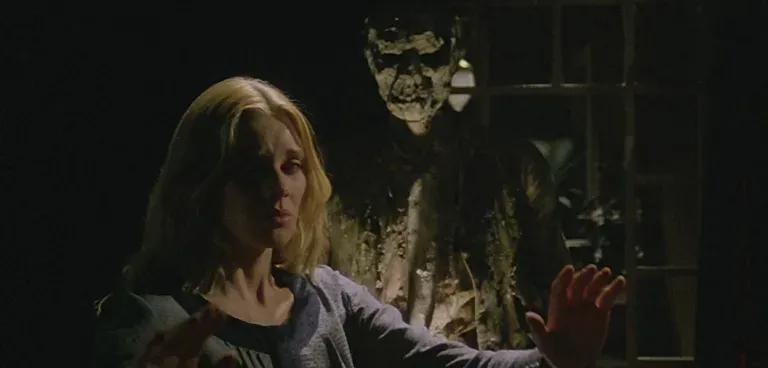

Orca Killer Whale

Orca Killer Whale
A 1977 film directed by Michael Anderson
In the wake of the massive impact and commercial success of Steven Spielberg’s 1975 film “Jaws,” many film studios sought to capitalize on the interest in survival stories in marine environments with dangerous animals.

Produced by Dino De Laurentiis and partially inspired by Arthur Herzog’s novel of the same name, this film was also conceived to exploit the same formula, albeit distinguishing itself by presenting different themes such as revenge, grief, and the emotional connection between animals.
The Cast

Richard Harris played the role of the protagonist Captain Nolan, Charlotte Rampling portrayed Rachel Bedford, a marine biologist who assists Captain Nolan in his struggle against the killer whale, Will Sampson played “Umilak,” a Native American whose ancestral knowledge of orcas makes him a member of Captain Nolan’s crew.
Keenan Wynn played Novak, a fisherman and friend of Captain Nolan.
Robert Carradine was Ken, a young member of Nolan’s crew, and finally,
Bo Derek played Annie, Captain Nolan’s girlfriend. “Orca” was one of Bo Derek’s early films; she later gained fame for her role in “10.”
Recalling its Story:
Orca Killer Whale opens with fisherman Nolan, played by Richard Harris, and his crew capturing a shark for an aquarium. During the capture, a pregnant female orca attacks the shark to protect her calf. Nolan decides to capture the female orca to sell to the aquarium, ignoring the fact that she is pregnant.
During the transport of the orca to the aquarium, the female gives birth to her calf, but both die due to the stress and injuries sustained during the capture. The male orca, companion of the female, witnesses the tragedy and becomes wild, embarking on a retaliatory crusade against Nolan and his crew.
The orca begins to haunt the local maritime community, destroying boats and attacking fishermen. Tormented by remorse for his actions, Nolan tries to end the orca’s revenge, but the situation becomes increasingly desperate.
Meanwhile, Rachel Bedford, a marine biologist played by Charlotte Rampling, joins Nolan in hopes of better understanding the orca and finding a peaceful solution to the conflict. However, Rachel’s attempts are hindered by Novak, a whale hunter played by Keenan Wynn, who seeks to exploit the situation for his personal gain.
The conflict between man and orca reaches its climax when the orca attacks the coastal village during a festival, causing death and destruction. Nolan, Rachel, and their friend Umilak, a Native American played by Will Sampson, desperately try to stop the orca and end its reign of terror.
The final showdown takes place in open sea, where Nolan confronts the orca in an epic confrontation. In the end, Nolan sacrifices himself to end the orca’s fury, which eventually swims away into the open sea.
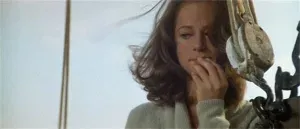
The film concludes with Rachel and Umilak reflecting on the lessons learned from the tragedy, as the orca disappears over the horizon, leaving behind an indelible impression of the fragility of the balance between man and nature.
The Soundtrack
The soundtrack was composed by the renowned Italian composer Ennio Morricone. It is wonderfully evocative music capable of underlining the emotions and tensions present in the story, from the power and majesty of the orca to the most intimate and emotional aspects of the narrative.
Production and Final Considerations
The filming largely took place in the province of Newfoundland and the coasts of Labrador during the fishing season. Most of the filming took place in the town of Petty Harbor, about 15 kilometers south of the capital of St. John’s. The orca used for filming was a trained specimen from the San Francisco Aquarium. Rubber artificial orcas were also used. The shark used at the beginning of the film was caught by the renowned shark fisherman Ron Taylor. Richard Harris insisted on performing the acrobatic scenes in the ice sequences himself, without the assistance of a real stuntman, risking his life several times.
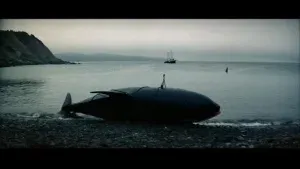
Initially, the film was criticized for its inaccurate portrayal of orcas and lack of biological realism in the animal’s behavior. Additionally, criticism was directed at the plot and some underdeveloped moments and characters.
Yet, despite its flaws, “Orca Killer Whale” over the years has acquired a certain charm, earning the status of a cult movie among genre enthusiasts.