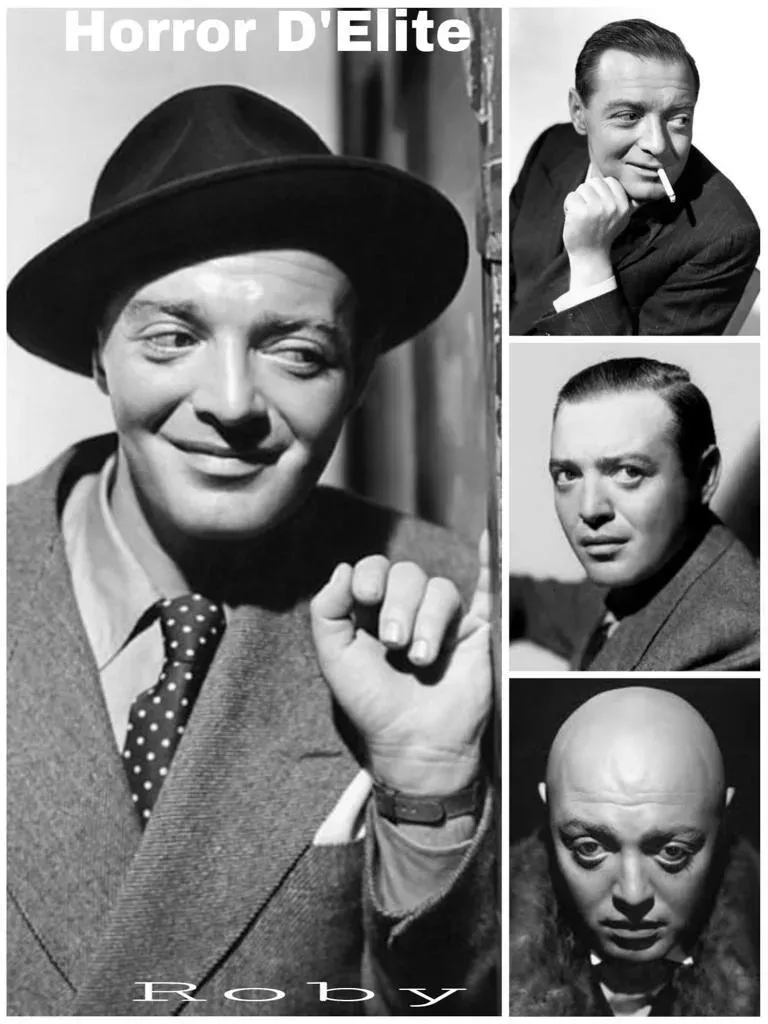
Peter Lorre
|

Peter Lorre

Peter Lorre

He was a Hungarian-born actor naturalized as an American citizen (like his colleague Lugosi), with an extremely expressive face and a shifty, watery gaze.

Lorre perfectly embodied the archetype of the criminal, the traitor, the paranoid, the abject and wretched being.

Indeed, he was chosen by Fritz Lang to portray the monster of Düsseldorf.

With an extraordinary physical and psychological involvement, he played the sexual maniac who lured and killed little girls in the film M (M – A City Searches for a Murderer, 1931).

He worked in France and the United Kingdom, where he appeared in a couple of Hitchcock-directed films, The Man Who Knew Too Much (1934) and Secret Agent (1936).

He always added a sinister touch to his performances.

In 1935, he moved to Hollywood, where he proved himself to be a great dramatic actor, as in Crime and Punishment (1935), a film adaptation of Dostoevsky’s novel.

He later acted in various mystery and espionage films, always displaying exceptional versatility.

For example, in the role of the frivolous and effeminate Joel Cairo in the noir The Maltese Falcon (1941).

Lorre was nervous, small, petulant, and with his protruding eyes and high-pitched nasal voice, he also made the character of the smuggler Ugarte in the cult classic Casablanca (1942) unforgettable.

He also had an unexpectedly strong comedic streak, which he showcased in Arsenic and Old Lace (1944) and Beat the Devil (1953).

After directing and starring in The Lost One (1951) in Germany, his career began to decline, and in his later years, he was often cast in cabaret or even caricature roles.

For instance, in 20,000 Leagues Under the Sea (1954), Around the World in 80 Days (1956), and The Sad Sack (1957) alongside Jerry Lewis.

Peter Lorre was also known to be a great prankster in his private life…

Vincent Price reportedly told the story that, during the funeral of his compatriot Bela Lugosi, buried with his beautiful Count Dracula cape, Lorre suggested that perhaps it would be a good idea to drive a nice ash stake through his heart as well…


Subscribe to our YouTube channel 

Similar Posts

  • Freaks

    The plot of “Freaks” follows the story of Hans, a trapeze artist in a traveling circus, and his girlfriend Cleopatra, a beautiful trapeze artist. However, Cleopatra is mainly interested in his inheritance and engages in a relationship with the circus strongman, Hercules. When she discovers that Hans has a considerable fortune, Cleopatra conspires with Hercules to poison him and seize his money. However, Cleopatra and Hercules underestimate the power and loyalty of the “freaks” community, who unite to avenge the betrayal suffered by one of their own.

  • Who you gonna call? Steve Johnson

    In the world of cinematic special effects, Steve Johnson stands out as one of the boldest and most creative artists in the industry. With a career spanning over three decades, Johnson has contributed to a number of iconic films, using cutting-edge techniques and an exceptional capacity for innovation to create some of the most memorable and terrifying effects in cinema. His work has had a significant impact on how stories are told through extraordinary and evocative visuals. Who you gonna call? Steve Johnson!

  • | |

    Tim Burton’s Star

    On Tuesday, September 3, 2024, it was a special day for fans of cinema and gothic art: Tim Burton, the visionary director, producer, and screenwriter, finally received his well-deserved star on the legendary Hollywood Walk of Fame. This recognition marks a significant moment in the career of a man who has spent decades shaping the collective imagination with his unique and unmistakable style.

  • A Blade in the Dark

    A Blade in the Dark (1983), directed by Lamberto Bava, is an important entry in the landscape of Italian horror and giallo films from the 1980s. Lamberto Bava, son of the legendary director Mario Bava, brings a suspenseful and mysterious story to the screen, blending gothic elements with a plot filled with supernatural and thriller components. With an engaging narrative and a stylistically refined direction, the film has become a significant example of Italian horror cinema from the period.

Leave a Reply

Your email address will not be published. Required fields are marked *