The Thing

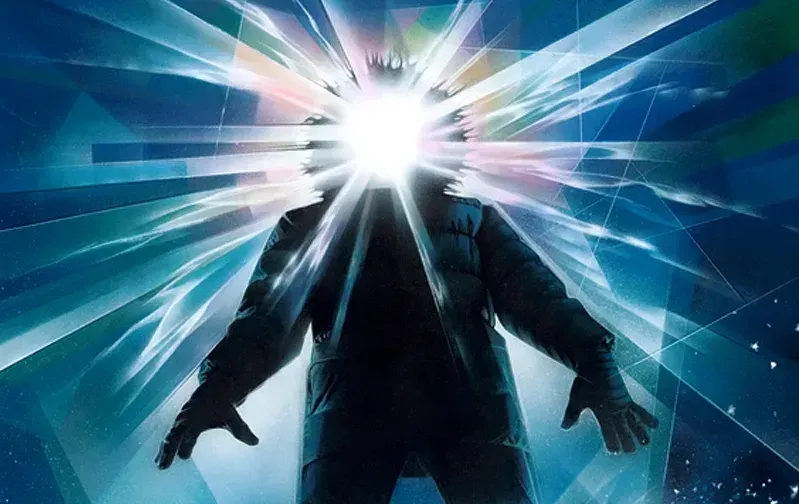
The Thing by John Carpenter (1982)
In Antarctica, a monstrous creature that takes on animal and human forms endangers the lives of a group of scientists.
Quote.
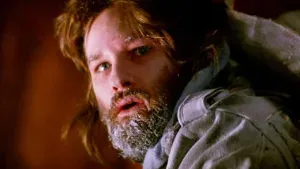 “You all think I’m crazy, don’t you?! Well, you’re wrong! You don’t realize what’s happening here, but I do! Do you think The Thing wanted to become an animal?!? No dog would travel a thousand miles through ice without a reason! Don’t you get it yet?! That thing wants to become like us! If its cells spread, they could imitate any being on Earth! I don’t want to be turned into whatever it is!” (Blair)
What is “The Thing”?
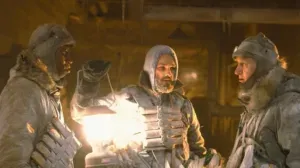 It could take the form of any animal or human you know well. It could be your dog or your closest friend. There’s no way to know for sure if the person in front of you is who they say they are. Because in this case, the evil is a parasitic alien organism that perfectly replicates the appearance of whoever it attacks, replacing them. No one is safe from this threat, and experience is no help; it can even be a hindrance. It challenges everything we know—our very conception of reality—feeding on our certainties to deceive and destroy us… and to become us.
Reflections.
John Carpenter draws inspiration from the story *Who Goes There?* by John W. Campbell, crafting what has become a true cult classic in the science fiction/horror genre.
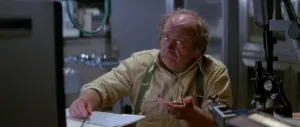 Carpenter’s *The Thing* is particularly interesting because it changes several key points from the original story and the previous film adaptation. These include the setting, the nature of the alien threat, and the reaction to it.
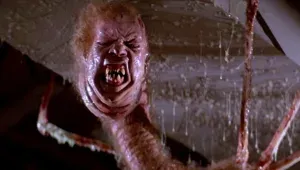 First of all, the story moves from the North Pole to the South Pole, representing a complete reversal, even geographically, compared to the previous film. This change respects the original setting of the story. But what stands out most is the altered depiction of the alien creature. It’s no longer a single, well-defined body, a clear enemy to fight. Here, *The Thing* becomes an entity in constant metamorphosis, unrecognizable and indistinguishable. It seamlessly blends into the human or animal forms it invades, becoming a perfect imitation—a dangerous and indistinguishable counterfeit.
 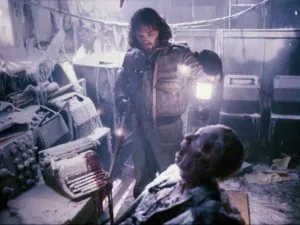 As a result, uncertainty breeds distrust and paranoia among those involved. It’s impossible to unite against a creature that can assume anyone’s appearance. Human relationships are shattered and torn apart with the same ferocity as the alien organism’s attacks. This is perfectly illustrated throughout the film, particularly in the marvelous and terrifyingly nihilistic and desperate finale. When confined in a small space and forced to fight for personal survival, humans become ruthless and extremely distrustful.
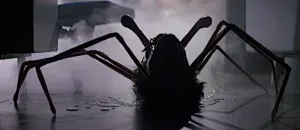 The soundtrack for *The Thing* was composed by Ennio Morricone, although very little of his work was actually used in the film. Nonetheless, the main theme, which was used throughout the movie, remains iconic.
The film is the first chapter in the so-called “Apocalypse Trilogy” and is considered by Carpenter to be his favorite work.
Conclusions.
 The Thing is known for its claustrophobic atmosphere and escalating paranoia. The special effects, designed by Rob Bottin, are particularly famous and innovative for their time, making the transformation and attack scenes memorable and unsettling. Although it received a lukewarm reception initially, over the years it has become a cult classic, appreciated for its psychological tension, Carpenter’s direction, and the soundtrack, which together create an oppressive and eerie atmosphere.
 Subscribe to our YouTube channel.