The Mist

 The Mist
by Frank Darabont (2007)
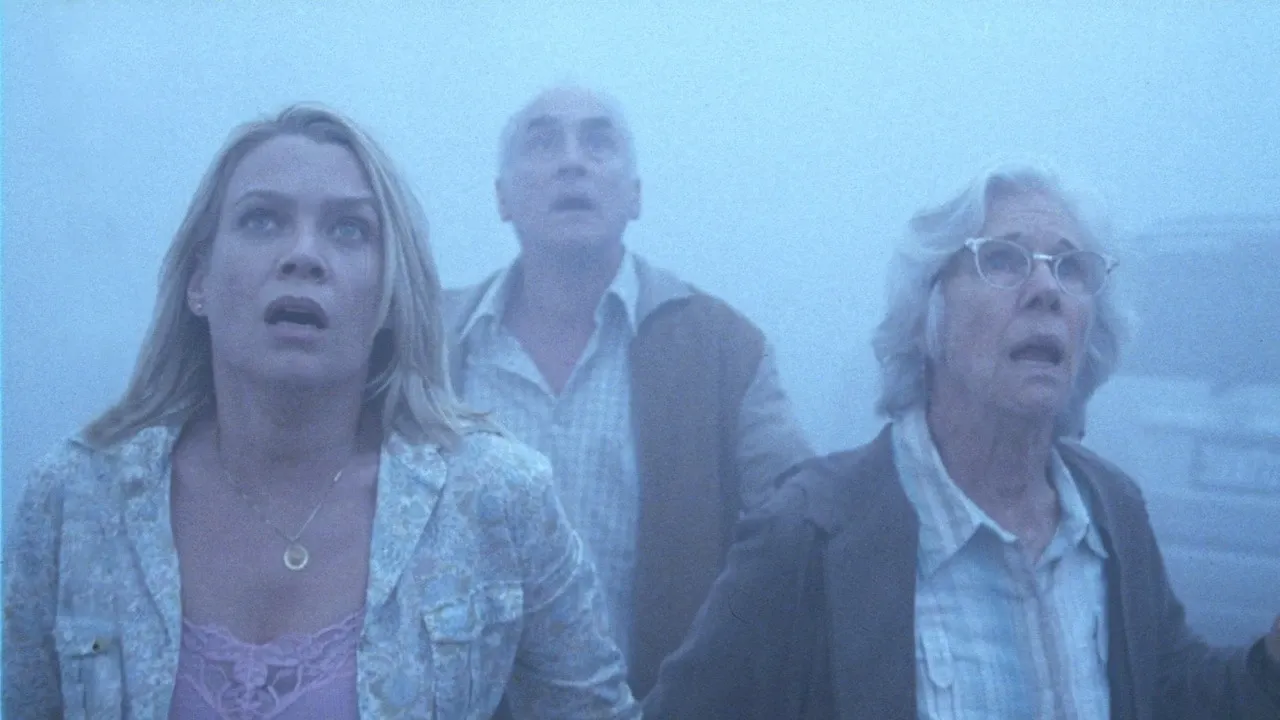
Bridgton, Maine. After a violent storm, a mysterious and dense fog appears, seemingly hiding terrifying things within it.
Quote.
“Something in the fog took John Lee.” 
There’s something in the fog.
Imagine, for a moment, that you are inside your local supermarket, where you usually shop. You know the clerks and the manager, and maybe even some of the customers waiting in line at the registers or in the various aisles. You have just filled your cart because, after the storm the night before, you know it’s wise to stock up before the shelves are desolately empty. And outside, there’s a strange fog, perhaps thicker and denser than usual, but it doesn’t seem alarming. Until a wounded man rushes in. His eyes are terrified, wide open, and incredulous. “There’s something in the fog,” he says, alarmed. “Something in the fog took John Lee.”
 Considerations.
 Considerations.
Frank Darabont returns to adapt a King story for the big screen, following “The Shawshank Redemption” and “The Green Mile.”
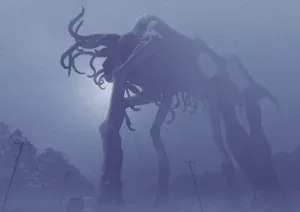
**The Mist** is a solid and gripping film that, after a quick start, immediately immerses us in a whirlwind of mystery and tension. It does so convincingly and without frills. The fog is mysterious by its very nature because it hides everything and redefines the reality around us. Darabont uses this element very intelligently, choosing to play with our expectations and assumptions. In the film’s first part, the most interesting, he fuels our interest and fear. Instead of showing us the creatures hidden within the surrounding mist, he focuses on creating a decidedly mysterious and captivating atmosphere. So much so that when the first tentacles of these monsters finally emerge, one feels a bit disappointed to abandon one’s fantasies about them. The mystery is thus unveiled, and the scenes become more explicit, while never exceeding in extreme gore. The threat of that “there’s something in the fog” reveals its supernatural nature, while being frighteningly real. 
**The Mist** also merits praise for its solid screenplay, which perfectly captures the microcosm within the supermarket. We encounter a varied representation of humanity. From the religious zealot, convinced of the coming apocalypse, to a group of men banding together to face the situation. But not only that: there are also military personnel and ordinary, lost, and frightened citizens.
 A devastating ending.
 A devastating ending.
**The Mist** has a finale that is hard to forget. A gut punch, terrible, that cannot leave anyone indifferent. An ending different from that of the novella, which left a glimmer of hope for the future. In the film, Darabont invents a new conclusion, dark, devastating, almost unbearable. But perfect, so much so that it was praised by King himself. An ending that is still remembered today in rankings of the most devastating film endings, because it kills all hope. The actors deliver noteworthy performances, starting with the main protagonist, Thomas Jane, with his damned American face. The only flaw of this film is some of the special effects used, which clearly reveal the film’s low-budget nature. It’s a real shame because the project deserved better in this regard.
 Conclusions.
 Conclusions.
The Mist remains one of the best adaptations of a King story on the big screen. In its own way, it has earned cult film status over the years, thanks especially to impeccable construction and a memorable ending. It’s a film that goes beyond simple supernatural horror, exploring the depths of the human soul and social dynamics in times of crisis. It remains an important work in the landscape of modern horror cinema.
 Subscribe to our YouTube channel
Dive into a chilling world with Nightmares