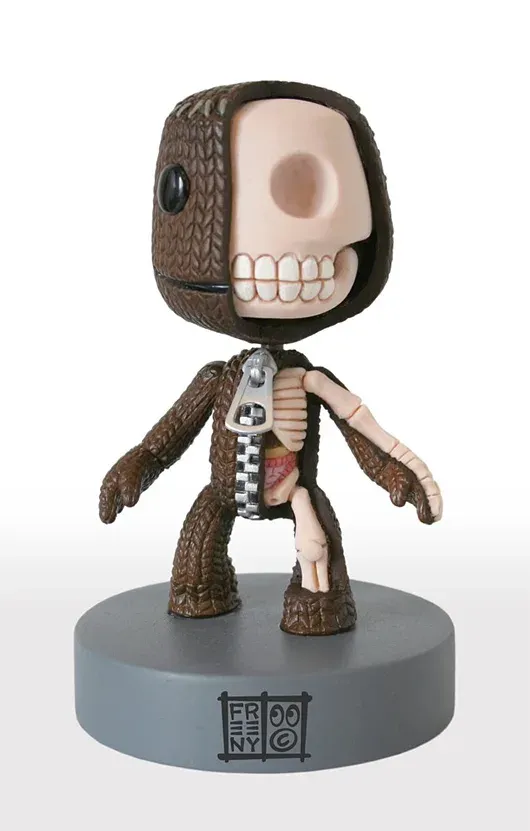
The Toys of Jason Freeny

Jason Freeny is an internationally renowned artist and sculptor known for his unique and innovative approach to horror art. His ability to transform familiar pop culture characters into anatomical artworks has captured the attention of a wide audience, making him a prominent figure in contemporary art. In this post, we’ll explore Freeny’s life, work, and impact on the current art scene, with the eyes of Jason Freeny’s Toys, of course…
 Biography and Training
 Biography and Training
Jason Freeny was born in the United States and showed a natural inclination for art from a young age. After attending the School of Visual Arts in New York, he worked for several years as an illustrator and designer, collaborating with companies such as MTV and Time Warner. However, it was his shift to sculpture that marked a decisive turning point in his career.
Style and Technique
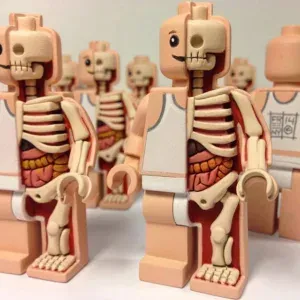
Freeny’s work is characterized by a blend of pop culture elements and anatomical details. His most recognizable pieces are dissections of toy and cartoon characters, such as LEGO, Mickey Mouse, and video game figures. Using materials like resin and polymer, Freeny creates sculptures that reveal the inner workings of these characters, exposing bones, muscles, and organs with incredible precision and attention to detail.
Freeny’s technique is meticulous: he starts with the virtual dissection of the character, often using 3D modeling software to plan the sculpture. He then creates a physical model, hand-sculpting every anatomical detail and assembling the various parts. The result is a piece that perfectly balances imagination with science, creating an effect that is both fascinating and unsettling.
 Themes and Influences
 Themes and Influences
Freeny’s work explores themes of duality and contrast, such as the visible and the invisible, the known and the unknown. His art encourages viewers to reflect on the fragility and complexity of life, masked behind the apparent simplicity of toys and fantasy characters. This approach has roots in Freeny’s influences, which range from Andy Warhol’s pop art to Leonardo da Vinci’s detailed anatomy.
Impact and Recognition
Freeny’s work has received widespread international acclaim. His sculptures have been exhibited in galleries and museums around the world, from New York to Tokyo. He has also collaborated with numerous companies, including Kidrobot, Mighty Jaxx, and the iconic LEGO toy company. These collaborations have brought his work to an even broader audience, cementing his status as an innovator in contemporary art.
One of his most notable projects is his collaboration with the 2016 film series “Shin Godzilla,” where he contributed to the design of the creatures, bringing his unique and unsettling vision to the big screen. This work further solidified his reputation as one of the most influential designers in the fields of horror and fantasy.
 The Evolution of Freeny’s Art
 The Evolution of Freeny’s Art
In recent years, Freeny has continued to push the boundaries of his art. He has explored new forms and materials, incorporating advanced technologies such as 3D printing to create even more complex and detailed works. This spirit of innovation not only keeps his work fresh and relevant but also demonstrates his willingness to push beyond conventional boundaries, experimenting and challenging artistic norms.
Conclusion
Jason Freeny is an artist who has masterfully blended traditional art with pop culture, creating a new genre of sculpture that is both captivating and disturbing. His works not only entertain but also provoke deep reflection on the nature of existence and the interaction between the fantastical and the real world. With his ongoing quest for new forms of expression and innovative techniques, Freeny continues to surprise and inspire audiences, solidifying his place as one of the most distinctive and influential figures in contemporary art.
In the post “The Best Horror Sculptors in History” you can explore the fascinating world of horror sculpture and celebrate the extraordinary talents that have brought these unforgettable works to life… The Best Horror Sculptors in History.

Subscribe to our YouTube channel